
Last updated November 25, 2026
 Sweep & inspection
 Caps & crowns
 Flue relining
 Masonry repair
 Gas fireplace service
Level 1 sweep and inspection to the NFPA 211 annual standard - flue, crown, cap, and flashing checked and photographed
Chimney sweep logs do not sweep chimneys. They loosen some creosote - which then falls where a brush and vacuum still have to collect it.
Chimney Cleaning Warning Signs: A Far Rockaway Homeowner’s Reference Guide
Most of what goes wrong with a chimney announces itself from the outside first. Homeowners in Far Rockaway tend to start with the firebox, looking up the flue with a flashlight after the first cold night, and stop there if nothing obvious shows. That’s backwards. The masonry skin, the crown, the flashing where the chimney meets the roof, and the odor that greets you on a muggy afternoon in Far Rockaway all speak before the interior ever does. This guide walks the structure from the outside in, then into the firebox and the room where smoke and carbon monoxide actually show up. By the end, you’ll know which signs mean a sweep now, which mean a repair before the season, and which can wait for a scheduled inspection.
Quick Answer
The main chimney cleaning warning signs are a strong smoky or acrid odor in the house, smoke that rolls back into the room when you light a fire, dark shiny creosote visible on the flue walls, white efflorescence or spalling brick on the exterior, rust streaks along the flashing, cracked firebrick in the firebox, and a carbon monoxide detector that trips or reads high. Any one of these means the chimney needs a sweep or inspection before the next fire. Two or more together means stop burning until a professional has looked at it.
Styles & brands we work with
- Sweep & inspection
- Caps & crowns
- Flue relining
- Masonry repair
- Gas fireplace service
Table of Contents
- Exterior Warning Signs You Can Spot From the Ground
- Efflorescence, Spalling, and What Your Brick Is Telling You
- Creosote Stages and Odor Profiles: What the Smell Actually Means
- Smoke Behavior as a Diagnostic Tool
- Firebox Deterioration and What Each Crack Pattern Indicates
- Carbon Monoxide: The Warning Sign You Can’t See
- Sweep and Inspection Schedule for Far Rockaway Homes
- What Actually Happens During a Professional Sweep
Exterior Warning Signs You Can Spot From the Ground
A chimney is a masonry column standing in weather. In Far Rockaway, that weather swings from humid summers to freezing winters, and the freeze-thaw cycle is hard on brick and mortar. The exterior signals come before interior symptoms because the outside takes the beating first. Here’s what to look at, and what each signal means.
Position yourself at the base of the chimney on a clear day and read it top to bottom:
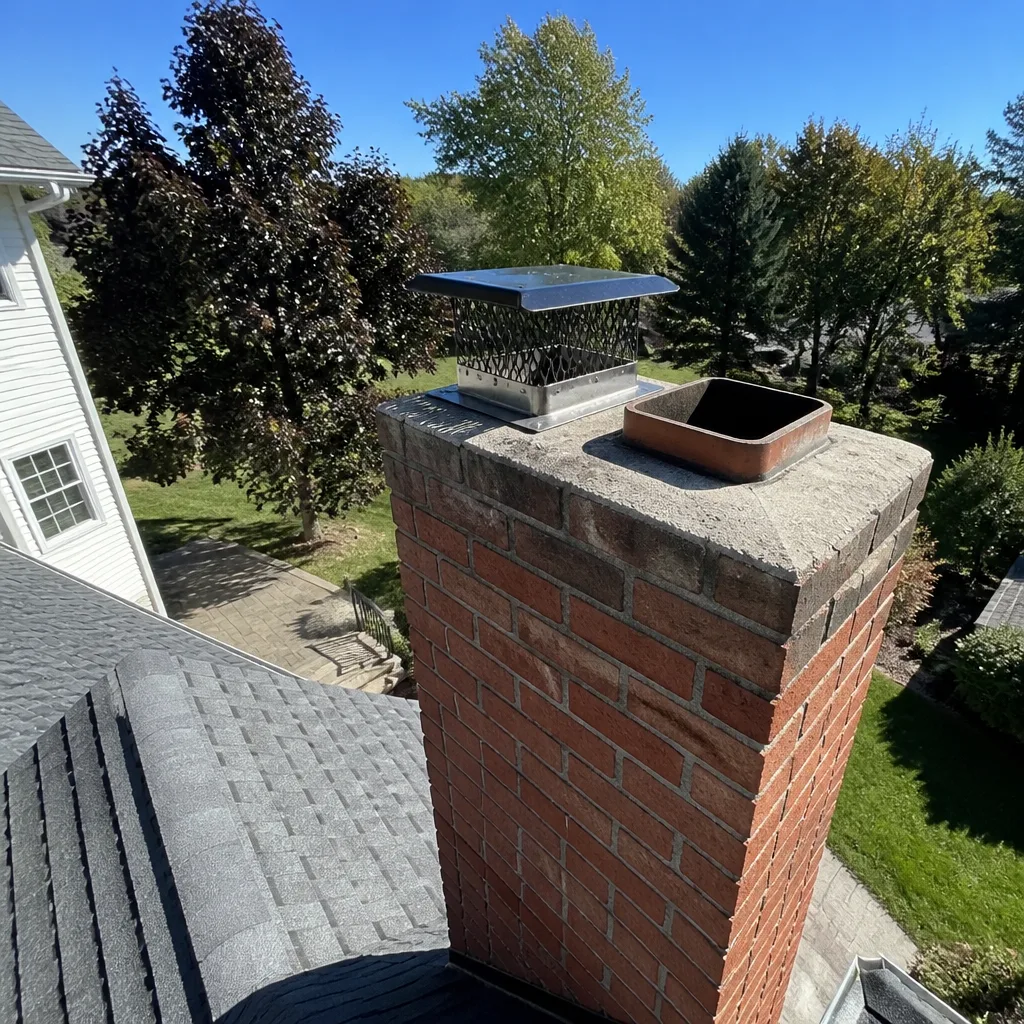
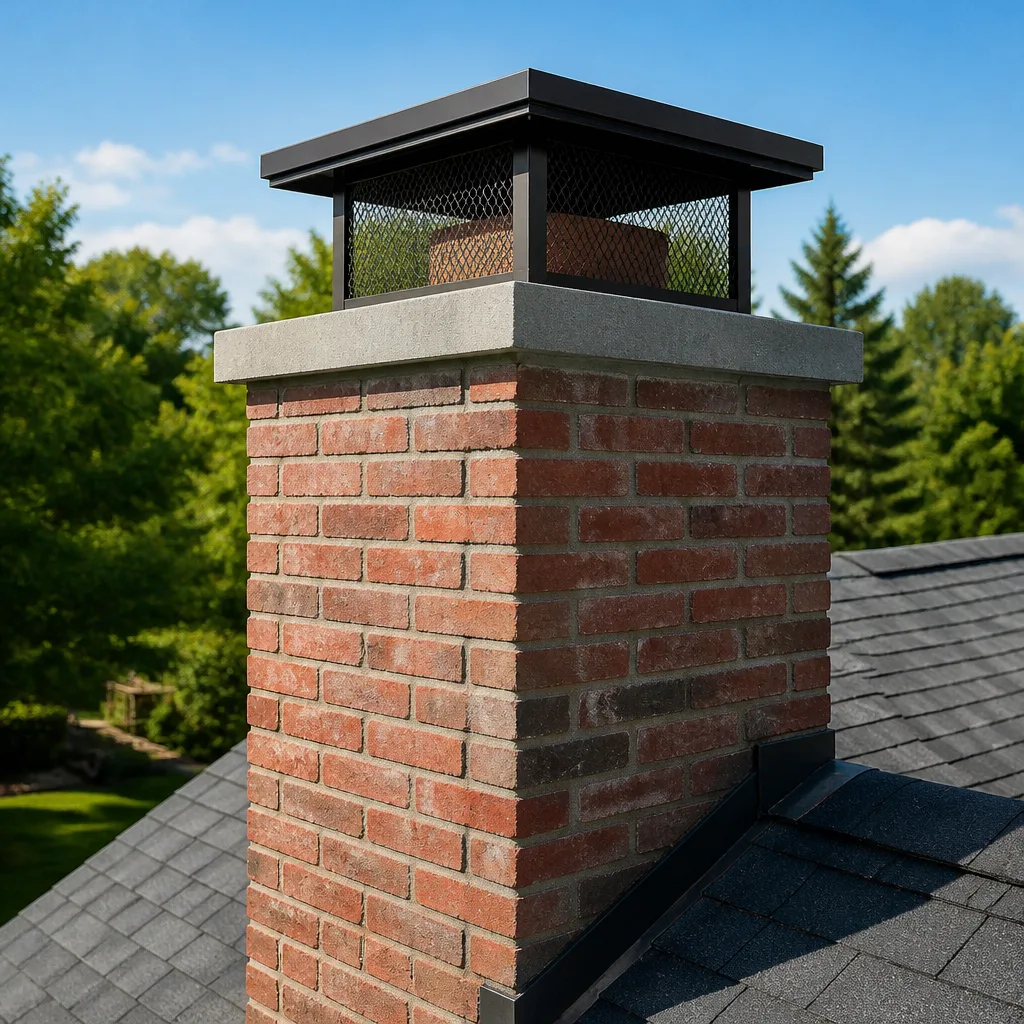
- The crown. The concrete cap at the very top should overhang the chimney walls and slope away from the flue. A crown with a visible crack, a piece missing, or a flat top that holds water is the single most common source of moisture trouble we see on Far Rockaway chimneys. A bad crown lets water in at the top, where the masonry is thinnest.
- The cap. A spark arrestor or chimney cap on the flue opening keeps rain, birds, and squirrels out. A missing, rusted, or detached cap is an open door to the flue. Products like chimney cap & crown installations are straightforward and protect everything below them.
- The flashing. The metal seal where the chimney passes through the roof. Rust streaks running down the brick or down the roof surface below the chimney point to flashing that has failed. Water follows that path into the attic and the ceiling.
- The brick faces. Look for brick that has lost its face (spalling) or shows a white salt-like bloom (efflorescence). Both are moisture signs, covered in the next section.
- The mortar joints. Recessed, crumbly, or missing mortar joints let water into the wall cavity and weaken the structure over time.
If any of these shows up, don’t wait for the interior symptoms to arrive. Exterior moisture damage is cheaper to correct before it reaches the flue liner.
Efflorescence, Spalling, and What Your Brick Is Telling You
Two exterior patterns cause more confusion than any others: white powdery bloom on the brick, and brick faces flaking off. They look similar and they mean different things, but both trace back to water in the masonry.
Efflorescence
Efflorescence is the white, chalky, salt-like deposit that appears on brick and mortar. It happens when water moves through the masonry, dissolves salts inside the brick, and evaporates at the surface, leaving a crust behind. On its own, efflorescence is cosmetic, but it’s a warning. Water is getting into the wall somewhere: a failing crown, failed flashing, cracked mortar, or a chimney cap that isn’t doing its job. In Far Rockaway, the humid summer air keeps masonry wetter longer, so efflorescence shows up here on chimneys that would stay dry in a drier climate. A white bloom after a wet stretch means find the water source, not just scrub the bloom off.
Spalling
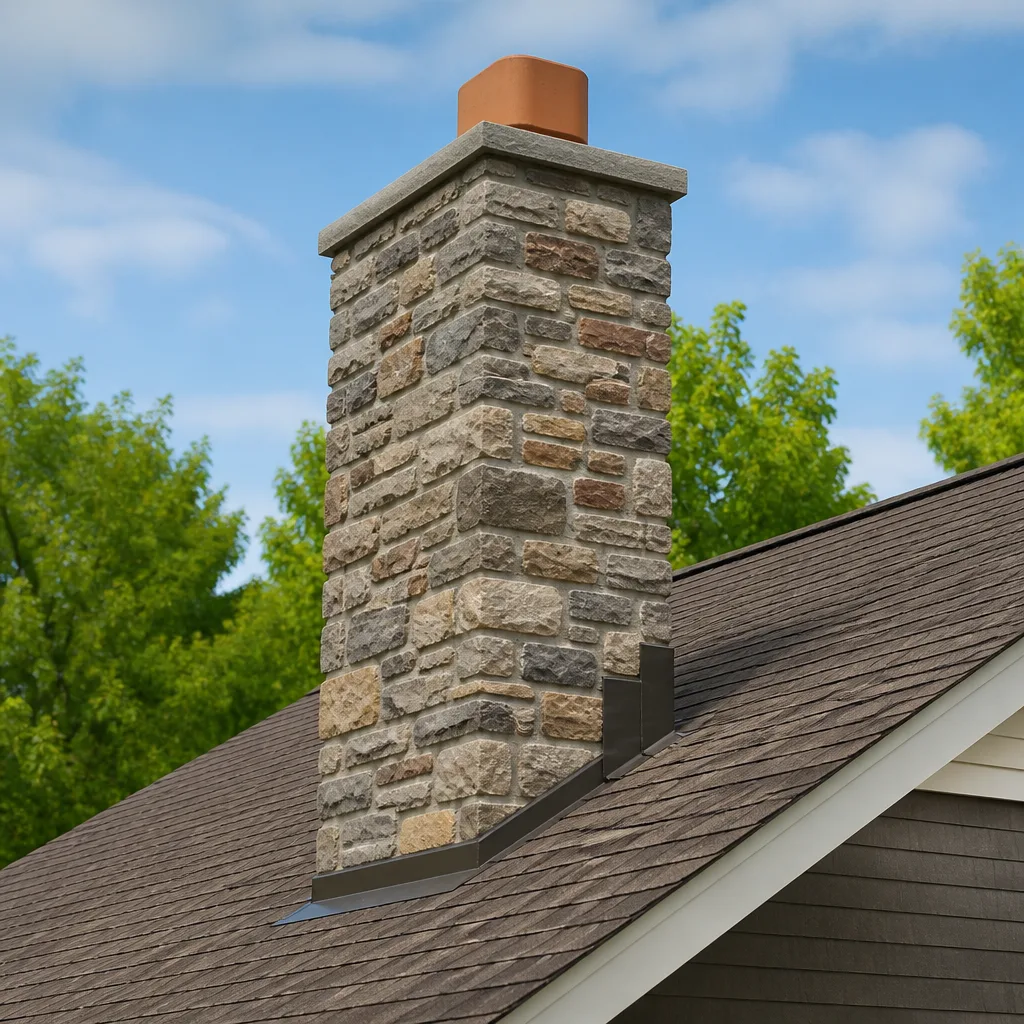
Spalling is the next stage. The face of the brick has detached, revealing the softer core underneath. This happens when water soaks into the brick and then freezes. The ice expands, pops the face off, and the brick is permanently weakened. Far Rockaway sees enough hard winter nights that a chimney with poor drainage will spall steadily through a few winters. Spalled brick means the chimney walls are losing material. Left alone, the chimney loses structural capacity. Once brick faces are popping, repairs are no longer optional, and you’re looking at tuckpointing or rebuild work rather than a cleaning.
Rust Streaks
Rust streaks are the flashing tell. When the metal flashing that seals the chimney-to-roof joint oxidizes and pulls away, water runs down the brick and rust deposits along the path. Rust streaks just below the roofline, or along the chimney’s side face, mean the flashing needs attention before the next heavy rain.
All three signs are why we start every diagnostic from the exterior. A professional-grade crown product, sealed correctly, prevents the whole cycle. Our chimney repair work covers crown rebuilding, tuckpointing, and flashing correction as one scope when the damage traces to a single moisture source.
Creosote Stages and Odor Profiles: What the Smell Actually Means
Creosote is the residue of incomplete combustion, and it builds in stages. The stages matter because each one behaves differently under heat, and the smell your chimney puts into the house is a direct read on how far along the buildup has gone. This is the section where the nose earns its keep.
The Three Creosote Stages
- First stage: soot and light flake. A dusty, powdery coating you can brush off with a standard sweep. Low risk. This is what a chimney looks like after a season of regular fires.
- Second stage: crusty and flaky. A hardened layer, sometimes with visible scales. Brushable with effort, but a sign that the previous cleanings may have been skipped. This is where a sweep every season starts to matter.
- Third stage: glazed. A shiny, tar-like coating that has essentially fused to the flue walls. It is dense, it burns hot, and it can let a flue fire start. Third-stage creosote does not come off with a brush. It needs chemical treatment or relining.
Third-stage creosote is the reason you should never ignore a smell. If it smells smoky in July, the accumulation is heavy.
What the Odor Tells You
The smell of your chimney, especially on a humid summer day with no fire lit, is a diagnostic in its own right. Note which one you smell:
- Musty or damp. Moisture intrusion. Water is in the flue or the masonry, and the smell is wet ash and wet soot. This points at the crown, the cap, or the flashing. Fix the water entry, then sweep.
- Petroleum or oily. Oil-fired residue. Some homes in Far Rockaway still use oil heat connected to the chimney, and a petroleum smell says oil combustion byproducts are depositing in the flue. That residue needs professional attention and the flue needs to be sized correctly for the appliance.
- Sharp, acrid, almost chemical. The creosote stage has shifted toward glazed. This is the smell of tar-heavy smoke that has soaked into the masonry and is off-gassing. It’s the strongest signal in this guide, and it means stop burning until the chimney has been swept and inspected.
If you can smell your chimney from the living room on a humid July afternoon, that’s not a ventilation problem. That’s a creosote problem, and it needs a sweep before the first fire of the season. Our chimney sweep service includes a visual inspection of the flue so you know which stage you’re dealing with.
Smoke Behavior as a Diagnostic Tool
Smoke is your fire talking. Where it goes, and where it refuses to go, tells you what kind of problem you have. Homeowners tend to lump all smoke trouble into “bad draft,” but the three main causes look different in the room, and they need different fixes.
Smoke Rolls Out of the Firebox Into the Room
A fire that sends a lazy curl of smoke over the firebox lip and into the room on lighting, then clears as it warms, has a draft problem. The flue is cold, the fire is small, and the chimney hasn’t started pulling upward yet. A pre-warm trick (a lit roll of newspaper held near the open damper) often helps. If the smoke keeps rolling out after the fire is burning hot, it’s no longer a cold-flue issue and needs inspection.
Smoke Comes Down the Chimney and Out of the Fireplace
Smoke that drops down the flue and spills into the room, especially on a windy day, points at a blockage, an undersized flue, or a chimney that is too short for the roof. A blockage might be a bird’s nest, a collapsed tile, or heavy creosote, and no amount of tamping with the damper will fix it. This is an inspection case.
Smoke Seeps Out Around the Damper or From Cracks in the Firebox
Smoke that leaks from the firebox edges, the damper frame, or cracks in the surround is a liner problem. The flue has failed somewhere, and smoke is finding the path of least resistance through the masonry rather than up the chimney. This is the most serious of the three, because carbon monoxide is riding the same path. Stop using the fireplace until it’s inspected.
Each pattern has a specific fix. Knowing which one your fireplace shows before you call saves a diagnostic visit and points the sweep straight at the problem.
Firebox Deterioration and What Each Crack Pattern Indicates
The firebox is the interior chamber where the fire actually burns. Its firebrick is designed to absorb and radiate heat, and the mortar joints between the bricks are the temperature-rated kind. Cracks in the firebox are not all the same, and reading the pattern tells you which forces are at work.
Thermal Shock Cracking
Thermal shock produces fine, tight hairline cracks running across the firebrick faces and sometimes a crazed pattern. This happens when the firebox is heated hard and cooled fast, repeatedly. The brick expands and contracts, and hairline cracks develop as a result. Thermal-shock cracks in the firebrick face are common on fireplaces that see hot, fast fires, and they need to be monitored rather than panic-repaired. A professional assessment tells you whether the cracks have moved past the surface.
Settling Cracks
Settling cracks are wider, often in the mortar joints between bricks or running diagonally across a firebox wall. They come from the masonry shifting over time, sometimes from foundation movement or from long-term moisture damage. Settling cracks in the firebox are a red flag for the whole chimney, not just the firebox, because if the firebox is shifting, the flue above it may be moving too.
Flue-Pressure Cracks
Flue-pressure cracking shows as a gap opening at the smoke chamber or at the top of the firebox where the smoke shelf starts. When the flue is undersized or restricted, the pressure of the rising smoke pushes outward on the firebox top. That kind of crack is a sign the chimney is working against itself. A sweep who reads pressure cracks will recommend a flue inspection and may find a liner issue rather than just a firebox repair.
Firebrick repairs, damper repairs, and fireplace-level work sit inside the five categories we run. None of this is masonry for its own sake; you fix what the crack pattern tells you to fix. The full set of services (sweep, inspection, cap and crown, chimney repair, fireplace repair) exists because a chimney rarely has just one problem.
Carbon Monoxide: The Warning Sign You Can’t See
Carbon monoxide is the part of this list you can’t smell, see, or taste. It’s an odorless gas produced by incomplete combustion, and a chimney that’s blocked or cracked lets it into the living space while the fire is burning. This is why the chimney sits in the same conversation as the smoke detector, and why detector placement near the fireplace system is different from general household rules.
Why Placement Near the Fireplace Matters
Broad household guidance places CO detectors near sleeping areas and on each level. That serves a general home safety plan, and you should keep it. But for a home with a working fireplace or fuel-burning appliance, the highest-risk point is where the combustion appliance is, and that’s the room with the firebox and the flue. A CO detector placed only in the upstairs hallway will register a carbon monoxide event later than one in the room where the fireplace operates. We recommend a CO detector in the fireplace room or the nearest adjacent space on the same level, plus the standard bedrooms and each floor. A CO detector that trips when the fireplace is in use means stop burning and call immediately.
When to Treat a CO Reading as a Chimney Signal
A single chirp or a momentary high reading is worth investigating, but an alarm that trips while the fireplace is burning is a specific chimney signal. That means combustion gases are not going up the flue, and the exposure is at the firebox. Possible causes:
- A blocked or partially blocked flue (nest, debris, collapsed tile, heavy glazed creosote)
- A cracked or failed liner allowing gases through the masonry
- A backdrafting chimney, often tied to a flue that is too short or a flue shared with an appliance
- A closed or partially closed damper
Never run a fireplace after a CO detector has tripped until a professional has inspected it and cleared it. This is a safety rule that doesn’t have exceptions. Our inspection service exists as its own diagnostic, so the answer you get is a description of your chimney’s condition, not a path to a sale.
Sweep and Inspection Schedule for Far Rockaway Homes
The industry rule for a working fireplace is simple: a sweep once a year for the firebox and flue, and a full inspection at the same time. If you burn wood often through the colder months, that annual sweep is the baseline. If you burn oil, gas, or another fuel through the chimney, the schedule still runs annually for safety but with a different inspection focus.
What the Annual Visit Covers
- A sweep of the firebox and flue: removes soot, ash, and the brushable creosote from the flue walls.
- A visual inspection: covers the firebox, smoke chamber, damper, flue and the exterior of the chimney, checking for cracks, blockages, spalling and crown damage.
- A camera inspection of the flue: necessary when the visual inspection turns up a suspected liner issue, a gap, or heavy creosote. The camera confirms what the eye can’t see and documents the condition in a way you can look at yourself.
Off-Season and Before-Season Timing
Two good windows to schedule a sweep exist for Far Rockaway homes. The first is spring, after the burning season, before humidity settles in and the creosote starts to smell. The second is late summer, before the first cold night in Far Rockaway catches you unready. A sweep in either window means the chimney is clean and inspected before the next fire. Waiting until the weather turns and the fireplace is already in use is the schedule nobody wants.
We answer 24/7 for questions and scheduling. Fast dispatch from 7am to 7pm, Sunday through Friday. Saturday is closed. Our technicians have up to 8 years of experience working on chimney systems that range from masonry and older construction to prefabricated metal installations. When a job calls for a material, we use professional-grade products – DuraFlex and Olympia Chimney for liner and flue work, HeatShield for ceramic resurfacing, Gelco and Famco for caps and ventilation, Copperfield for repair and restoration. The brand matters because the material is doing the protecting.
What Actually Happens During a Professional Sweep
A modern sweep isn’t a man with a broom. It’s a controlled process designed to remove the creosote, contain the mess, and check the flue in the same visit. If you’ve never seen a professional sweep, here’s the sequence.
- Set up containment. Drop cloths over the hearth and floor, and a shop-vac with a HEPA filter running. The room is protected before any tool goes near the firebox.
- Brush the flue from the top or bottom. A poly brush or whip line runs up the flue and knocks the soot and flake creosote loose. It falls into a catch under the firebox.
- Remove brushable creosote from the flue walls and smoke shelf. This is where creosote collects and where it’s got to come off.
- Inspect the flue and firebox. A camera on a long cable goes up the flue, and the sweep reads the liner surface and the joints while you can see what they see.
- Clean the firebox and glass, and check the damper and firebrick. Final check on the firebox, damper function, and firebrick condition.
- Report. You get a description of anything found, the difference between a real issue and a cosmetic one, and the option to schedule the repair or resurfacing separately.
Third-stage glazed creosote and liner issues may need more than a sweep. When a liner needs resurfacing rather than a full relining, HeatShield’s ceramic resurfacing is the standard many chimney professionals reach for. When a full relining is called for, DuraFlex stainless-steel liner systems are the industry-standard flexible liner. Our Chimney Sweep Far Rockaway service is the entry point. Everything else – cap and crown, repair, fireplace repair – is offered because it’s all the same structure and a sweep who finds a problem shouldn’t send you elsewhere to fix it.
Common Mistakes to Avoid
- Judging the chimney by the firebox alone. Homeowners in Far Rockaway often shine a light up the flue after the first fire and stop if nothing dramatic shows. Exterior damage – spalling, failed flashing, a cracked crown – is what leads to interior damage, and it’s all outside.
- Cleaning up efflorescence before finding the water. Scrubbing off the white bloom hides the symptom without fixing the moisture entry. The next wet season and the next freeze bring it back, and the brick is a little weaker for the delay.
- Skipping the sweep a season because the fire “looked clean.” Creosote builds on the interior flue walls in a way you can’t see from the firebox. The line is only visible when the sweep’s camera is on it, and that’s what makes an inspection worth doing every season.
- Ignoring the July smell. A chimney that smells on a humid summer day is telling you the creosote has gone glazed. Waiting until the first cold snap means a faster sweep and a full inspection when the chimney is already at risk.
- Using a general handyman for chimney work. Chimney systems use specific materials from named brands for a reason: DuraFlex, HeatShield, Olympia Chimney, Gelco, Famco and Copperfield products are designed for the flue, the smoke chamber, and the exterior, not general construction. A handyman with a brush and a ladder may not know the difference.
- Assuming a CO detector on the second floor covers the fireplace. It’s better than no detector, but not the right placement for a combustion appliance. Add one at the fireplace level, and treat any alarm while the fireplace is burning as a stop-burning call.
- Scheduling the sweep after the burning season starts. Far Rockaway’s first cold night tends to arrive before most homeowners think to call. Late summer is the practical window; under 100 days later the fireplace is already in use and the inspection happens with a fire risk already in place.
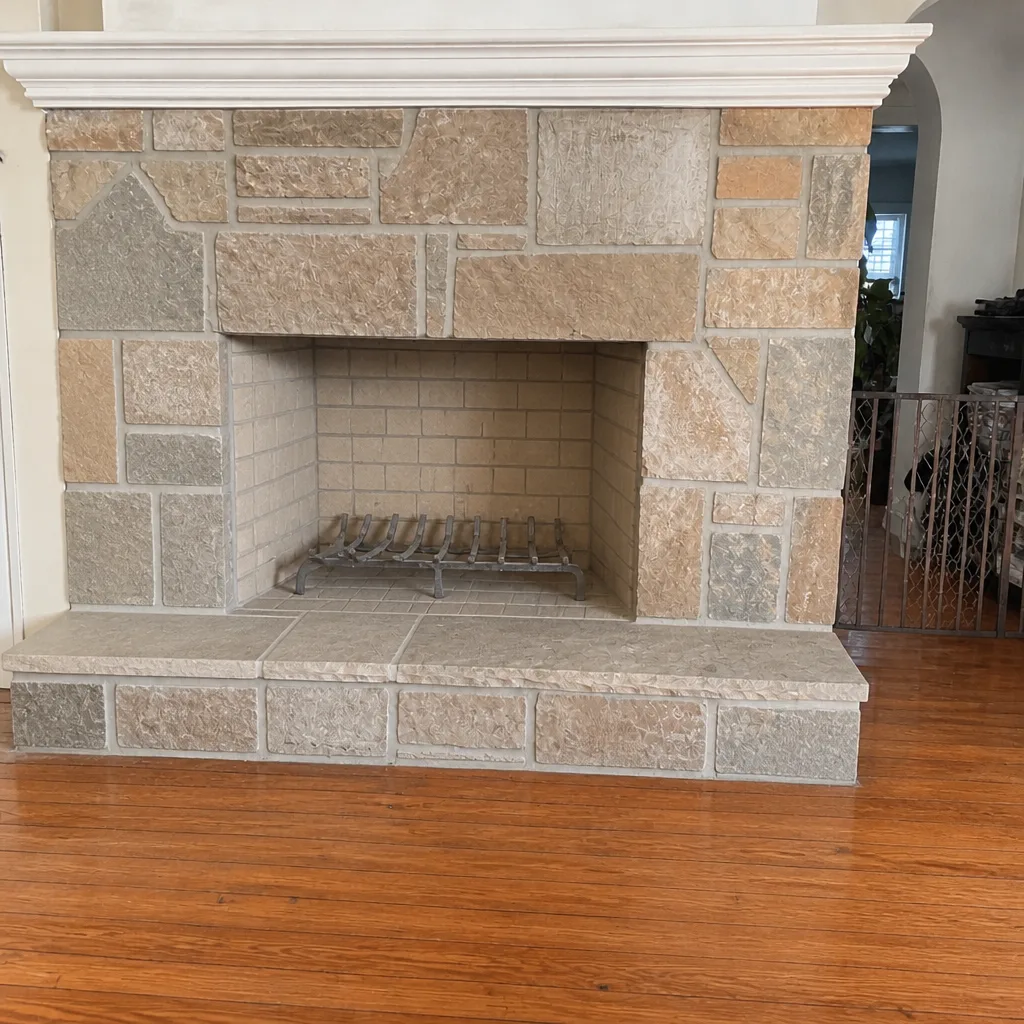
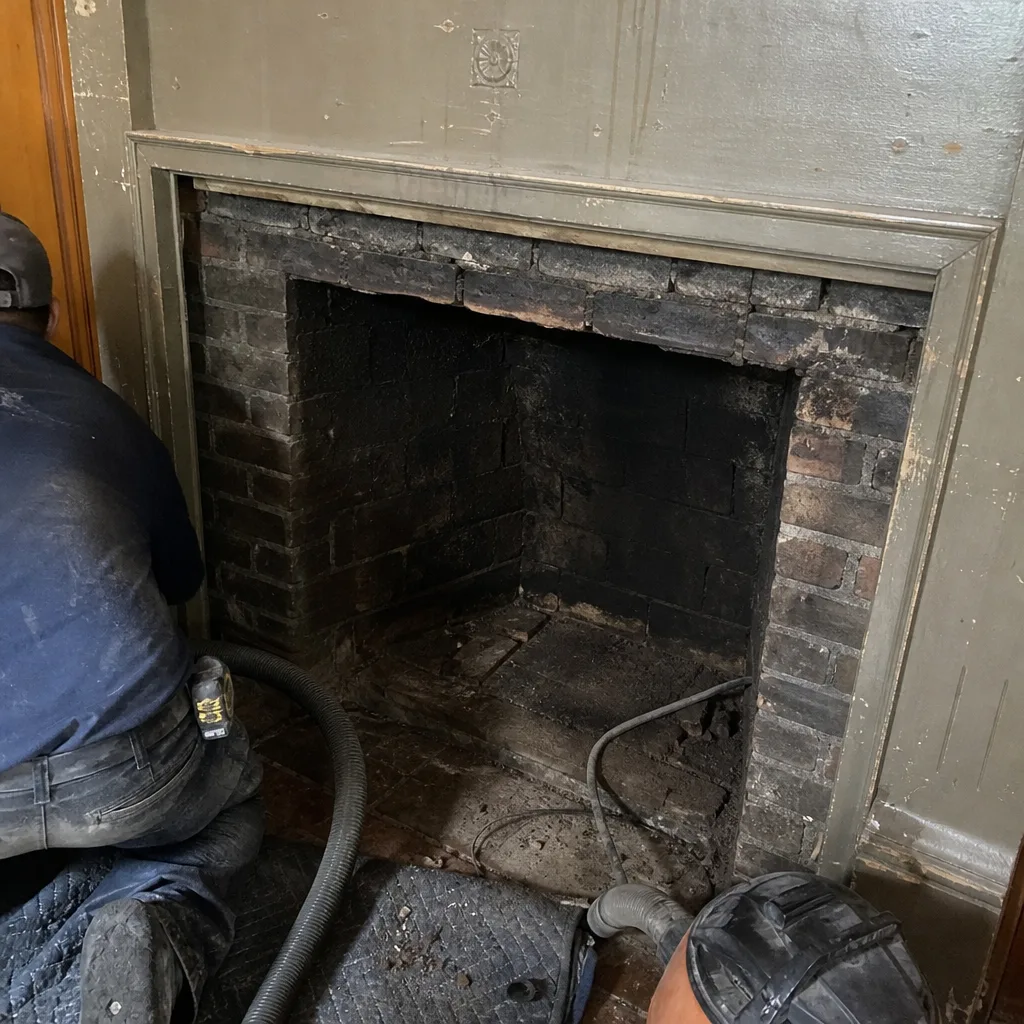
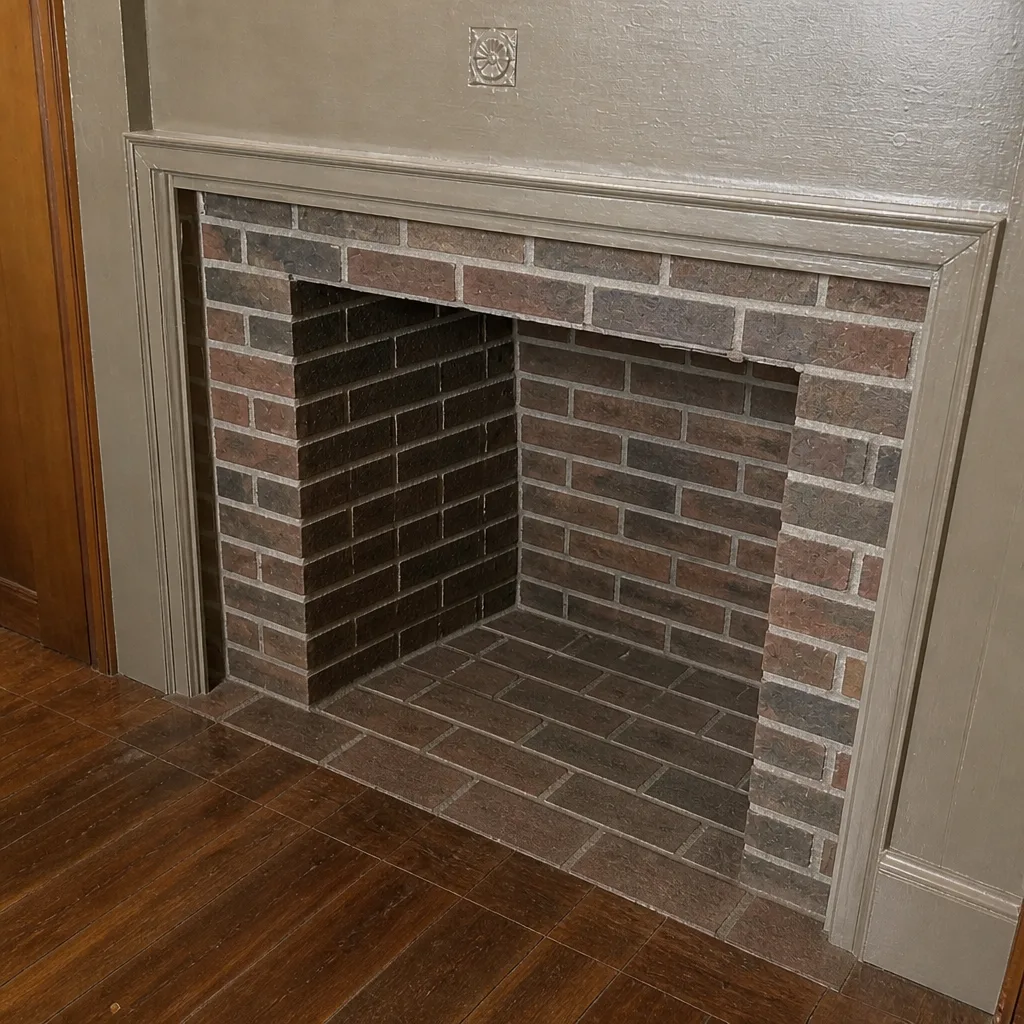
See the difference
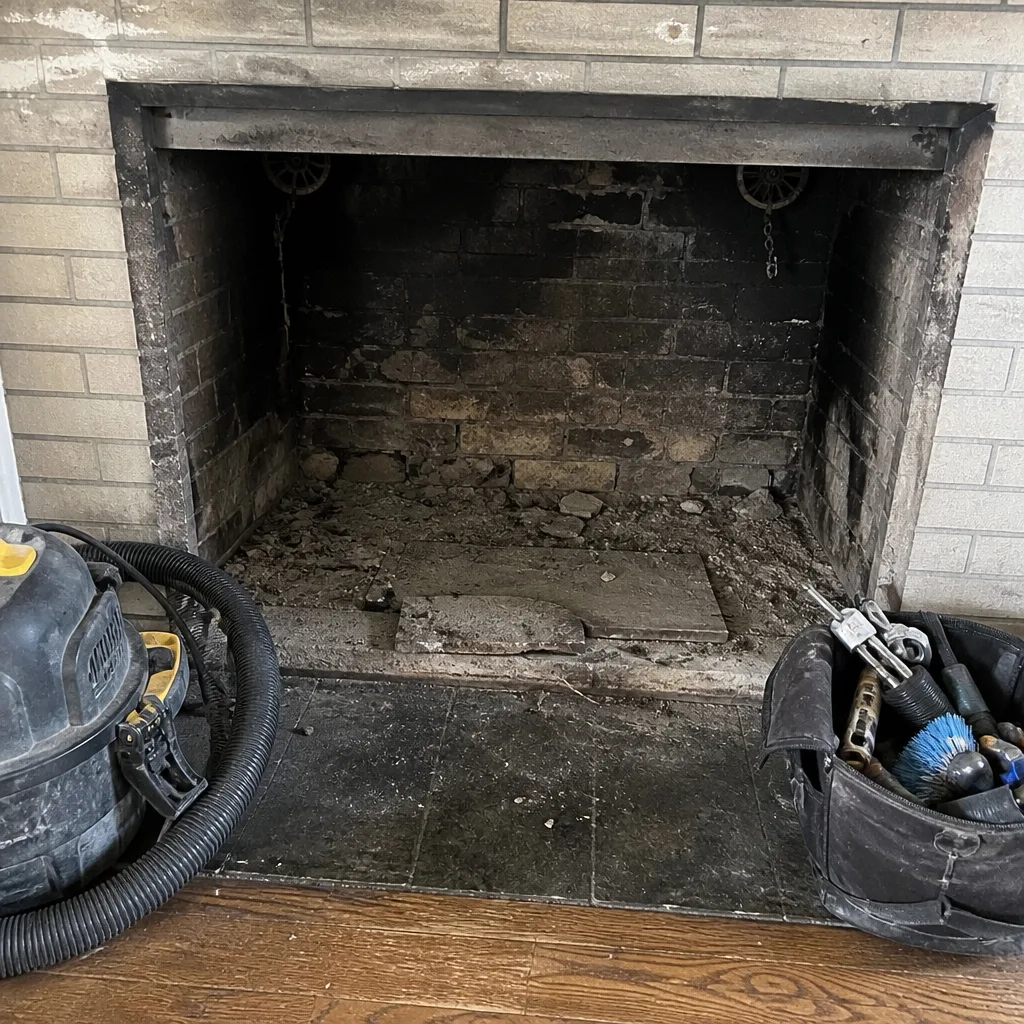 Before
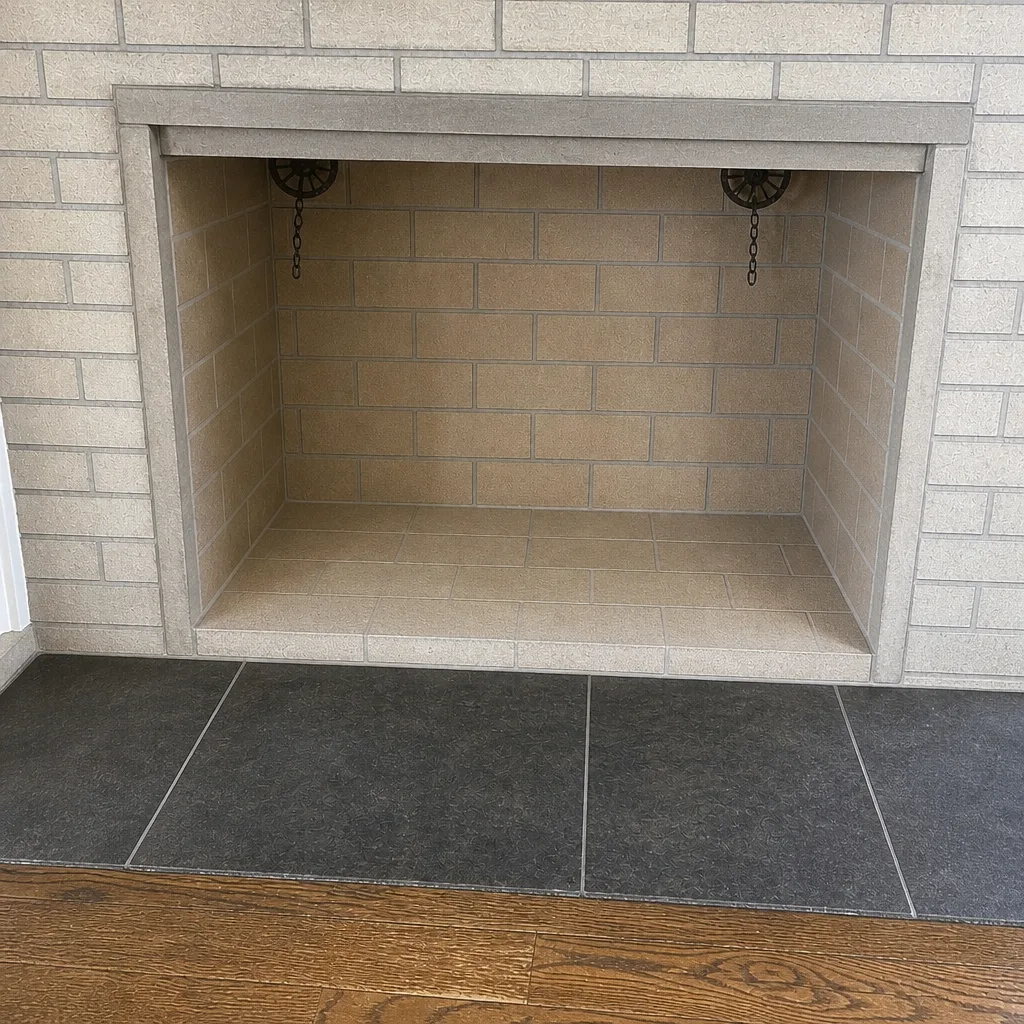 After
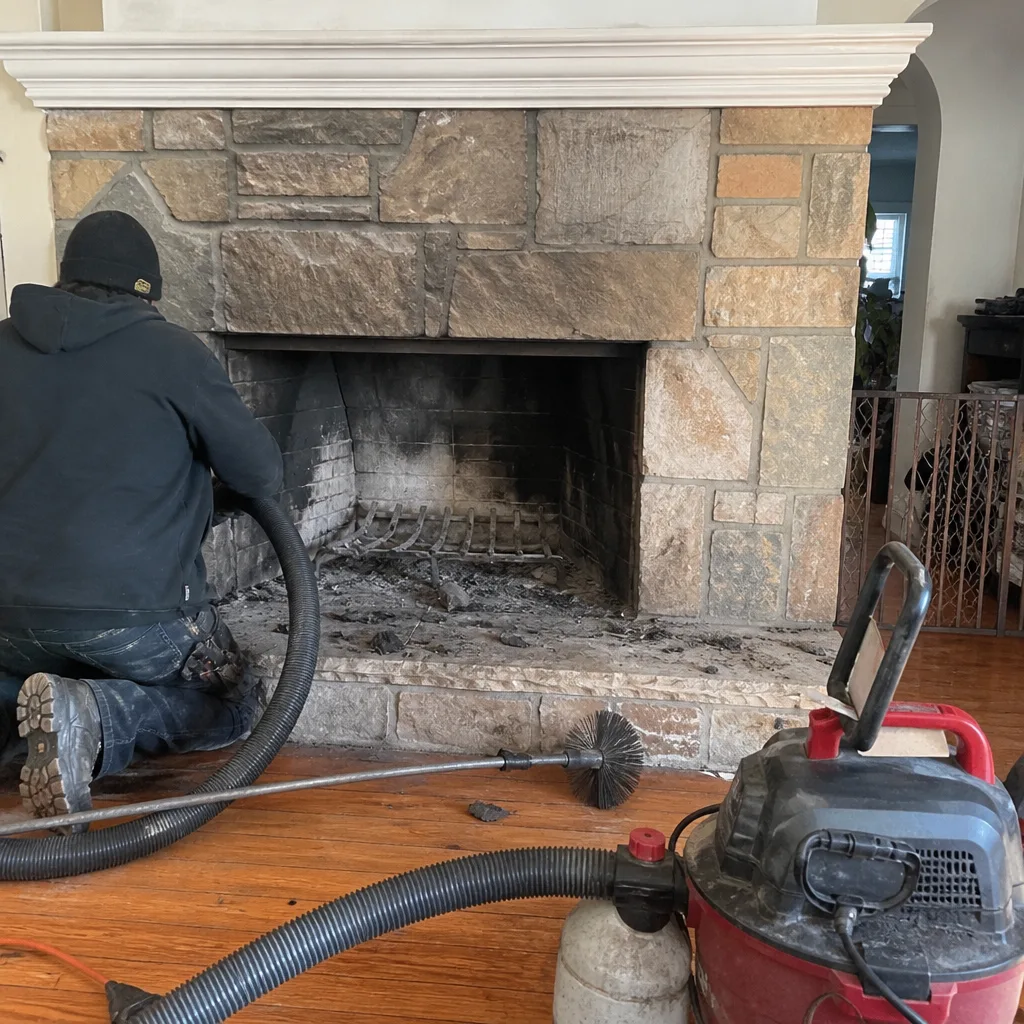 Before
 After
 Before
 After
When to Call a Professional
Call a professional if you see any of the following: third-stage glazed creosote or a smoky smell in the house, smoke that rolls or seeps into the room from the firebox or the damper frame, cracked firebrick that runs wider than a hairline, white efflorescence or spalling brick on the exterior, rust streaks along the flashing, a CO detector that trips while the fireplace is burning, or a chimney cap or crown that’s visibly damaged. If you’ve had a chimney fire, even a small one, call for an inspection and don’t relight the fire until it’s cleared. Any one of these signs is reason enough. Two or more together means stop burning now.
Chimney Sweep Far Rockaway offers free estimates in Far Rockaway. Call (866) 937-8492. We answer 24/7. Fast dispatch from 7am to 7pm, Sunday through Friday. Estimates are free and the written estimate sets the price.
Frequently Asked Questions
A chimney sweep in Far Rockaway is typically a per-job estimate that depends on the length of the flue, the amount of creosote, and whether a camera inspection is added. The estimate is free and the written estimate sets the final price. Call (866) 937-8492 for an exact quote – estimates are free.
A sweep is the cleaning: removing soot and brushable creosote from the flue walls. An inspection is the diagnostic: examining the firebox, flue, cap, crown and exterior for cracks, blockages, or damage, with a camera for the liner when needed. We treat these as two distinct jobs because you can have a clean chimney that’s still unsafe, and an inspection is what catches that. You can book either one on its own.
Once a year for a working fireplace is the standard, along with an annual inspection. If you burn wood heavily through the cold months, keep to that schedule. In Far Rockaway’s humidity, an annual sweep also keeps the creosote smell out of the house through the summer, which a skip-a-year schedule won’t. Call (866) 937-8492 to schedule – estimates are free.
First-stage soot accumulates into second-stage crust, which hardens into third-stage glazed creosote against the flue walls. That glazed layer is the fuel for a chimney fire, and it can let one ignite inside the flue. Alongside the creosote, small cracks in the flue or firebox can widen unnoticed, letting smoke and carbon monoxide into the house. Skipping the sweep isn’t a cost saver; it’s deferring the repair cost while the risk compounds. Call (866) 937-8492 for a sweep and inspection before the next season.
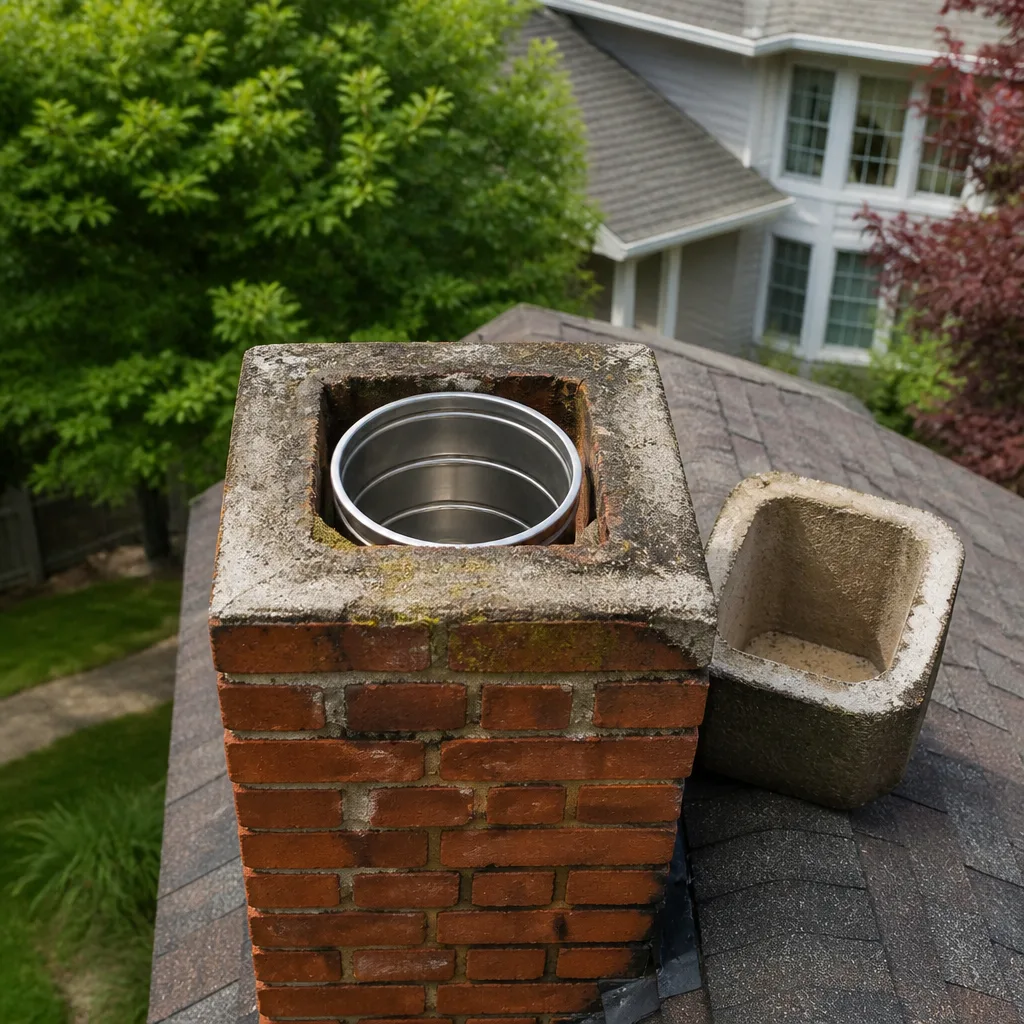
Not every chimney needs one. A liner is only replaced when an inspection finds cracks, gaps, or a failed section, and you see the evidence on camera before the work is recommended. When a liner is deteriorated but still structurally sound, HeatShield ceramic resurfacing can restore it instead of replacing it. When the liner has failed enough that resurfacing won’t hold, a DuraFlex stainless flexible liner is the standard fix. The camera report is what gives you the confidence to decide, and it’s yours to keep.
Because the creosote is off-gassing in the humidity. Third-stage glazed creosote in particular releases a smoky or acrid smell when the air is warm and damp, which is why Far Rockaway chimneys often announce a creosote problem in July rather than January. A spring sweep removes the creosote before the smell starts. Call (866) 937-8492 – estimates are free.
The Bottom Line
The chimney warning signs that matter most aren’t waiting in the firebox for you to find them. They show up on the exterior, in the brick faces and flashing, and in the smell a Far Rockaway chimney puts into the house on a humid day. Start from the outside and work in. If you can smell the chimney in July, see white bloom or spalling brick on the walls, find smoke curling into the room, or hear a CO detector alarm during a fire, those are the signals to call a sweep and an inspection. A camera inspection and a written report tell you exactly what you have before a fire is lit. Our technicians have up to 8 years of experience and work with DuraFlex, HeatShield, Gelco, Famco, Olympia Chimney and Copperfield products because the material quality is what protects your home between visits.
Call (866) 937-8492 for a free estimate. We answer 24/7. Fast dispatch from 7am to 7pm, Sunday through Friday, closed Saturday. The local pro is licensed and insured as their state requires, the sweep is booked before burning season, and nothing gets recommended without camera evidence you can see for yourself.
Written by the team at Chimney Sweep Far Rockaway.